We wish you Happy Holidays & a joyful New Year!

Not sure if your label adhesive is water-based or hot melt? Try 4 quick tests and choose the right option for your bulk order.
November 24, 2026
John Doe
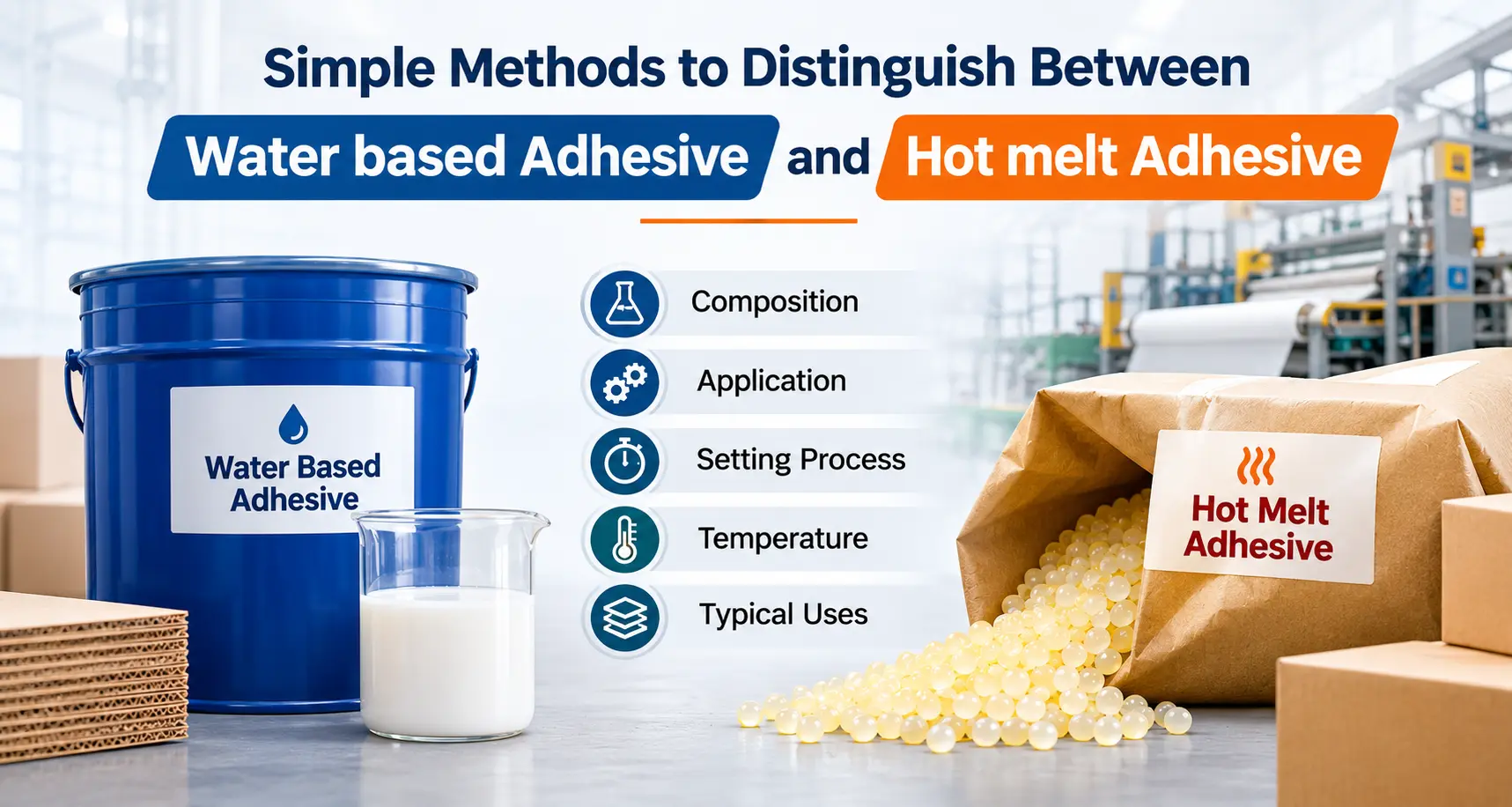
The right adhesive can make the difference between a label that stays firmly in place and one that costs your business time, money, and customer trust.
Whether you manufacture product labels, supply packaging materials, or purchase self-adhesive rolls in bulk, choosing the wrong adhesive can create serious problems. Poor bonding, peeling edges, adhesive residue, and temperature-related failures can affect product quality and disrupt your production process.
That's why choosing between water-based adhesive and hot melt adhesive is an important decision for every label manufacturer and packaging business.
Both adhesives offer different advantages. Hot melt adhesive provides quick bonding and strong initial tack, while water-based adhesive is widely used for paper labels and applications requiring specific heat-resistance properties.
But which one is right for your business?
At FormersPaper, we understand that every labelling application has different requirements. With a range of acrylic, hot melt, and UV adhesive solutions, we help businesses explore suitable label materials for their production and packaging needs.
In this guide, we'll explain the Simple Methods to Distinguish Between Water based Adhesive and Hot melt Adhesive, show you four simple ways to identify them, and help you choose the right option for your next bulk order.
Before comparing their performance, it is important to understand how these two adhesives work.
Both adhesives are used to attach labels to different surfaces. However, their composition and bonding processes are different.
Water-based adhesive is a type of adhesive that uses water as its main carrier. It contains tiny polymer particles distributed throughout the liquid. When applied to a surface, the water gradually evaporates, allowing the adhesive to form a bond.
These adhesives are commonly used in paper labels, packaging materials, and other applications where good surface adhesion and clean finishing are important.
Water-based adhesives often have a lower odour and can provide good heat resistance, depending on their formulation.
Hot melt adhesive is a thermoplastic adhesive that is solid at room temperature. It must be heated until it melts into a liquid before being applied to the required surface.
Once applied, it cools down and becomes solid again, creating a bond within a short time.
Hot melt adhesives are popular in high-speed packaging and labelling operations because they offer quick bonding and strong initial tack.
Many hot melt adhesives used in labels are rubber-based, although formulations can vary depending on the application.
Similarly, many water-based label adhesives are acrylic-based. However, these are common industry combinations rather than fixed rules.
To understand these adhesive types further, you can also read our guide on Rubber-Based vs. Acrylic Adhesive.
The biggest difference between these adhesives is how they form a bond.
Hot melt adhesive sets when it cools, while water-based adhesive forms a bond as the water evaporates. This difference affects their setting speed, initial tack, temperature resistance, production requirements, and overall performance.
Here is a simple comparison for businesses involved in label manufacturing and packaging.
Let's understand these differences in more detail.
Setting speed is an important factor for businesses operating high-volume production lines.
Hot melt adhesive sets quickly after application because it cools and becomes solid. This makes it suitable for packaging operations where labels need to bond almost immediately.
Water-based adhesive requires time for the water to evaporate. Depending on the formulation, coating thickness, and drying conditions, the bonding process may take longer.
What this means for B2B buyers:
Initial tack refers to how quickly an adhesive grips a surface when pressure is applied.
Hot melt adhesives generally provide strong initial tack. They can hold labels in place quickly, making them useful for applications that require immediate bonding.
Water-based adhesives may develop their full bonding strength gradually as the adhesive dries.
However, initial tack and final adhesion are not the same. The actual bonding strength depends on the adhesive grade, surface material, application pressure, and environmental conditions.
Temperature resistance is another important consideration when choosing an adhesive for labels.
Hot melt adhesives can soften when exposed to temperatures above their recommended operating range. This may affect label positioning and bonding performance during storage or transportation.
Water-based adhesives, particularly certain acrylic formulations, can offer better resistance to elevated temperatures.
However, performance varies between adhesive grades. Buyers should always check the recommended temperature range before selecting an adhesive for their products.
The chemical composition of an adhesive can affect its smell and suitability for different working environments.
Water-based adhesives generally have a mild odour because water is their primary carrier.
Hot melt adhesives may produce a noticeable resin-like smell, especially during heating and application.
For businesses with specific workplace or product requirements, it is important to review the adhesive's technical and safety documentation before bulk purchasing.
Both adhesive types require different production processes.
Hot melt adhesive needs heating equipment to melt the adhesive before application. The equipment must maintain the required temperature during production.
Water-based adhesive requires a drying process to remove moisture after coating. This generally involves drying equipment or ovens.
Neither option is automatically more energy-efficient. Actual energy consumption depends on production speed, machinery, coating requirements, and operating conditions.
Not every adhesive performs equally well on every surface.
Water-based adhesives are commonly used for paper, cardboard, and other porous materials because they can provide good bonding on suitable surfaces.
Hot melt adhesives can offer greater flexibility across different substrates, including certain plastics and other challenging surfaces.
However, the final result depends on the specific adhesive formulation and surface treatment.
For label manufacturers and packaging companies, testing adhesive compatibility with the actual packaging material is essential.
If you regularly purchase self-adhesive label rolls, knowing how to identify the adhesive type can help you inspect incoming materials and avoid unnecessary production issues.
You do not always need advanced laboratory equipment for an initial assessment. A few simple checks can provide useful clues about the adhesive.
Here are four practical tests you can perform.
Important: These are preliminary inspection methods, not certified laboratory tests. Results may vary depending on adhesive formulation, label material, age, and storage conditions. Always confirm the adhesive type using the manufacturer's technical data sheet (TDS).
This is one of the simplest ways to observe how an adhesive behaves.
How to perform the test:
What to look for:
The stretching behaviour can help identify certain hot melt adhesives because they have thermoplastic properties.
Temperature can affect the behaviour of different adhesive types.
A gentle heat test can provide an initial indication of how an adhesive responds to warmth.
How to perform the test:
What to look for:
This test is particularly relevant for businesses shipping labels to regions with high temperatures.
Avoid overheating the sample or using an open flame. Never perform this test on a label roll inside a printer or production machine.
Initial tack helps you understand how quickly an adhesive grips a surface.
This is an important property for businesses using automatic labelling machines and high-speed packaging lines.
How to perform the test:
What to look for:
For a more reliable comparison, test both samples on the same material under similar conditions.
Odour can sometimes provide another clue about the adhesive type.
How to perform the test:
What to look for:
Remember that odour alone cannot confirm the adhesive type. Different formulations can have different characteristics.
Do not depend on just one test when identifying an adhesive.
If several observations point towards the same adhesive type, you may have a useful preliminary indication. However, mixed results should be checked against the technical data sheet.
For commercial purchasing and quality control, the most reliable approach is to request adhesive specifications from your supplier and arrange laboratory testing when necessary.
Identifying the adhesive is only one part of label quality inspection.
Before approving a bulk shipment, procurement and quality control teams should also check the overall condition of the label rolls.
Here are three additional checks worth including in your inspection process.
Check the sides of the label rolls for excess adhesive or sticky residue.
Adhesive may sometimes ooze out from the edges due to coating conditions, storage temperature, or the adhesive formulation.
Sticky roll edges can create problems during unwinding, printing, converting, and dispensing.
For more information, read our guide on How to Prevent Sticky Edges on A4 Labels.
The appearance of an adhesive may provide some additional information.
For example, many acrylic adhesives are clear, while certain rubber-based hot melt adhesives may have a slight amber colour.
However, colour is not a reliable way to identify an adhesive on its own. Different formulations and ageing conditions can change its appearance.
For B2B buyers, the technical data sheet is one of the most important documents to review before placing a bulk order.
It should provide relevant information about:
For more detailed quality evaluation, businesses can also request peel adhesion and shear resistance testing.
The right adhesive depends on your product, packaging material, production process, and storage conditions.
There is no single adhesive that works best for every application.
For procurement teams and label manufacturers, the decision should be based on actual operating requirements rather than price alone.
Hot melt adhesive may be suitable when your business needs:
It is commonly considered for shipping labels, carton labelling, and other applications where quick initial bonding is important.
Water-based adhesive may be suitable when your business needs:
It is commonly used in paper labels and different packaging applications.
A practical tip for bulk buyers: Always test the adhesive on the actual packaging material before approving a large order. A sample that performs well on one surface may not provide the same results on another.
Also, adhesive selection alone does not establish food-contact suitability. If labels are used on food packaging, request the relevant compliance documentation and confirm applicable regulations separately.
A label that performs well in one location may not deliver the same results in another.
Temperature, humidity, transportation conditions, and warehouse storage can all influence adhesive performance.
This is particularly important for businesses exporting label materials across different countries.
Cold temperatures can affect the initial bonding performance of certain adhesives.
Businesses operating in colder regions should check the recommended minimum application temperature and service temperature before purchasing label stock.
High temperatures and humidity can create challenges during transportation and storage.
Hot melt adhesives may soften if exposed to temperatures beyond their recommended limits.
Buyers should prioritise suitable heat resistance and proper warehouse storage conditions.
International shipments often travel in closed shipping containers where temperatures can rise significantly.
Long transportation periods and changing environmental conditions can affect the condition of label rolls.
Before placing export orders, businesses should confirm the adhesive's storage requirements and temperature performance with the manufacturer.
Choosing an adhesive is not just a technical decision. It is also an important part of supplier evaluation and procurement planning.
Before confirming a large order, ask your supplier the following questions:
Asking these questions helps procurement teams reduce quality risks and build more reliable supplier relationships.
Finding the right adhesive is important, but choosing the right manufacturing partner matters just as much.
FormersPaper is a B2B manufacturer of labels and paper products, offering different adhesive solutions for businesses with varying application and production requirements.
The company offers acrylic, hot melt, and UV adhesives across PP, PE, and PET facestocks. Its in-house capabilities include coating, laminating, printing, and converting.
This allows FormersPaper to support different label requirements instead of relying on a one-size-fits-all approach.
Here are some important company details:
These capabilities make FormersPaper a manufacturing partner worth considering for businesses sourcing labels and paper products in bulk.
Businesses looking for reliable label and paper solutions can explore:
Minimum order quantities and production lead times depend on the product and project requirements. Contact the FormersPaper team to discuss your specifications and sourcing needs.
Water-based and hot melt adhesives may look similar, but their performance can be quite different.
Hot melt adhesive is generally preferred for applications requiring quick bonding and strong initial tack. Water-based adhesive is often suitable for paper labels and applications where lower odour and heat resistance are important.
For B2B buyers, the best choice depends on the packaging surface, production speed, storage conditions, transportation environment, and required bonding performance.
Simple tests such as fold and pull, gentle heating, initial tack, and odour checks can provide an initial understanding of adhesive behaviour. However, always confirm the adhesive specifications through the manufacturer's technical data sheet before approving bulk production.
At FormersPaper, we understand that every business has different labelling and packaging requirements. Our range of adhesive options and manufacturing capabilities helps businesses find suitable solutions for their applications.
Looking for the right adhesive solution for your next bulk label order?
Contact FormersPaper with your label specifications, packaging material, printing requirements, and estimated order quantity. Our team can help you explore suitable options and discuss samples for testing before moving forward with bulk production.
You can perform preliminary checks by observing adhesive stringing, response to gentle heat, initial tack, and odour. Hot melt adhesives may stretch into thin threads and soften when heated, while water-based adhesives generally show less stringing. However, always confirm the adhesive type through its technical data sheet.
Neither adhesive is better for every application. Hot melt adhesive is generally suitable for applications requiring quick bonding and strong initial tack. Water-based adhesive may be preferable for paper labels and applications requiring suitable heat resistance. The final choice depends on the adhesive grade and application requirements.
Yes, certain hot melt adhesive formulations can bond well to suitable plastic surfaces. However, the performance depends on the type of plastic, surface treatment, and adhesive formulation. Always test compatibility before ordering in bulk.
Many water-based acrylic adhesives offer good heat resistance. However, the actual performance depends on the formulation and operating conditions. Buyers should check the manufacturer's recommended temperature range before selecting an adhesive.
In some cases, yes. Both adhesive types can be used for label applications, but they may perform differently depending on the surface, temperature, and production process. A sample test helps determine which option is more suitable.
Hot melt adhesive is often suitable for high-speed production because it sets quickly after cooling and provides strong initial tack. However, the right choice also depends on the coating equipment, label material, and application requirements.
Acrylic and hot melt describe different adhesive characteristics and categories. Acrylic adhesives are commonly available in water-based formulations, while many hot melt label adhesives use rubber-based formulations. Acrylic adhesives can also be made in other forms, so buyers should confirm the actual adhesive chemistry with their supplier.
Store adhesive label rolls according to the manufacturer's recommendations. Avoid excessive heat, direct sunlight, moisture, and unsuitable storage conditions. Proper storage helps maintain adhesive performance and reduces the risk of roll damage.
FormersPaper offers acrylic, hot melt, and UV adhesive options across PP, PE, and PET facestocks. Buyers can contact the team to discuss suitable adhesive specifications for their label applications.
Yes. You can contact FormersPaper with your label size, printing requirements, packaging surface, and estimated order quantity to discuss suitable samples and technical specifications before confirming a bulk order.


Formers Paper is a leading manufacturer for a comprehensive range of sustainable paper & packaging products serving customers globally.
Shenzhen Formers Paper Co. Ltd, No.92 Zhugushi Road, Wulian community, Longgang District, Shenzhen, China